
Accepting birth clients for 2025
|
Hello, dear birth doulas and birthworkers! We know that your work is a labor of love, quite literally. Supporting families through the beautiful and transformative journey of childbirth can be incredibly rewarding, but it's also undeniably demanding. Today, we're here to discuss the importance of self-care and recovery routines for birth doulas, with a special focus on somatic experiencing. After all, taking care of yourself is just as vital as caring for the families you support. Let's explore how you can nurture yourself so you can continue to nurture others. Start with Self-CompassionAs birth doulas, you're often so focused on offering kindness and support to your clients that you might forget to extend the same level of compassion to yourself. Remember that it's perfectly okay to take a step back and prioritize your well-being. Begin your self-care journey with self-compassion, acknowledging that you deserve the same care you provide to others. Mindful BreathingOne of the simplest yet most effective self-care practices is mindful breathing. Find a quiet space, sit comfortably, and take a few deep breaths. Pay attention to your inhales and exhales, letting go of any tension with each breath. This practice not only calms your nervous system but also allows you to reconnect with yourself. Embrace Somatic Experiencing Somatic experiencing is a powerful tool for healing and self-care, especially for birth doulas who are exposed to intense emotional and physical experiences and/or secondary trauma regularly. By working with a somatic therapist or practicing somatic exercises on your own, you can release stored tension, process emotions, and restore your body's natural balance. Some examples incude:
Movement and ExerciseEngaging in regular physical activity is essential for maintaining your overall well-being. Consider yoga, Tai Chi, or gentle stretches to keep your body flexible and resilient. These practices not only help with physical strength but also promote emotional and mental clarity. Nourish Your Body Your body is your instrument, and you need to take care of it. Make sure you're nourishing yourself with a balanced diet and staying hydrated. Don't forget to treat yourself to your favorite indulgences from time to time; you've earned it! Traditional Chinese Medicine encourages warming foods for restoration, just like a new mother, and so a doula needs that comfort as well to help reset. Connect with Fellow DoulasBuilding a supportive community of fellow doulas can be incredibly comforting. Share your experiences, joys, and challenges with your peers. They understand your unique journey, and their insights can be invaluable. Rest and RechargeYou can't pour from an empty cup, so prioritize rest and sleep. Create a peaceful bedtime routine, practice relaxation techniques, meditate, and ensure you're getting enough restorative sleep to be at your best. Creative OutletsDiscover creative outlets that allow you to express yourself outside of your doula work. Whether it's painting, writing, music, a puzzle (that's me), or any other artistic pursuit, engaging in a creative hobby can be a wonderful form of self-care. ConclusionDear birth doulas, your work is a gift to the world, and you deserve to be cared for just as diligently as the families you support. By embracing self-compassion, mindful practices, somatic experiencing, and a nurturing routine, you can ensure that you continue to provide your invaluable services with love and strength.
Quick sidenote: Don't be summed up. Don't allow others to miss the artistry in your great work. You are caring for so much more than they see. You build an entire world around them in addition to your good job. Few will fully see through your eyes. But your work is far more than a job complete, it is an art and there is so many more gifts for them to discover. Remember, self-care is not a luxury; it's a necessity. When you care for yourself, you're better equipped to care for others. So, go ahead and prioritize your well-being—it's a beautiful journey that will only enhance your ability to support and guide families through their own transformative journeys. You're worth it!
0 Comments
Imagine placenta encapsulation as an insurance policy for your postpartum journey—a support when you need it the most. If the pills bring relief amidst the chaos, that's fantastic! And if not, they make excellent plant food. Here's why it's valuable:
When you choose placenta encapsulation, you're in for a comprehensive experience designed to make your journey smoother:
Starting at $250, this is an investment in your well-being. Ready to take the next step? Book now at www.placentadenver.com **The information on this website is not meant to diagnose any health related issues. Placenta encapsulation is not approved or regulated by the FDA. Liz Foster (Love In Motion LLC) is not a doctor or other health care professional.*
So you want to raise an emotionally intelligent child and and you're wondering where to begin? Start with these five steps. 1. Acknowledge your child’s perspective and empathize.Even if you can't "do anything" about your child's upsets, empathize. Just being understood helps humans let go of troubling emotions. If your child's upset seems out of proportion to the situation, remember that we all store up emotions and then let ourselves experience them once we find a safe haven. Then we're free to move on.Empathizing doesn’t mean you agree, just that you see it from his side, too. He may have to do what you say, but he’s entitled to his own perspective. We all know how good it feels to have our position acknowledged; somehow it just makes it easier when we don’t get our way. “It’s hard for you to stop playing and come to dinner, and still, it’s time now.” “You wish you could have me all to yourself, don’t you?” “You’re so disappointed that it’s raining.” “You want to stay up later like the big kids, I know.” “You’re mad your tower fell!” Why this encourages emotional intelligence:
2. Allow expressionLittle ones can't differentiate between their emotions and their "selves." Accept your child’s emotions, rather than denying or minimizing them, which gives children the message that some feelings are shameful or unacceptable. Disapproving of her fear or anger won't stop her from having those feelings, but it may well force her to repress them. Unfortunately, repressed feelings don't fade away, as feelings do that have been freely expressed. They’re trapped and looking for a way out. Because they aren’t under conscious control, they pop out unmodulated, when a child socks her sister, has nightmares, or develops a nervous tic. Instead, teach that the full range of feelings is understandable and part of being human, even while some actions must be limited.
Why this encourages emotional intelligence:
Listen to your child's feelings Remember, rage doesn't begin to dissipate until it feels heard. Whether your child is 6 months or sixteen, she needs you to listen to the feelings she’s expressing. Once she feels and expresses them, she’ll let them go and get on with her life. In fact, you’ll be amazed at how affectionate and cooperative she’ll be once she has a chance to show you how she feels. But to feel safe letting those feelings up and out, she needs to know you’re fully present and listening. Assured that it’s safe, children have an amazing ability to let their feelings wash over and out, leaving them relaxed and cooperative. Your job? Breathe through it, stay present, and resist the urge to make those troublesome feelings go away. Your child instinctively knows how to heal herself.
Why this encourages emotional intelligence:
Teach problem solvingEmotions are messages, not mud for wallowing. Teach your child to breathe through them, feel them, tolerate them without needing to act on them, and, once they aren’t in the grip of strong emotion, to problem-solve and act if necessary. Most of the time, once kids (and adults) feel their emotions are understood and accepted, the feelings lose their charge and begin to dissipate. This leaves an opening for problem solving. Sometimes, kids can do this themselves. Sometimes, they need your help to brainstorm. But resist the urge to rush in and handle the problem for them unless they ask you to; that gives him the message that you don't have confidence in his ability to handle it himself. “You’re so disappointed that Molly can’t come over because she’s sick. You were really looking forward to playing with her. When you’re ready, maybe we can brainstorm ideas of something else to do that sounds like fun.” “You’re pretty frustrated with Sam not giving you a turn. Sometimes you feel like not playing with him anymore. But you also really like playing with him. I wonder what you could say to Sam, so that he could hear how you feel?” Why this encourages emotional intelligence:
Play it outWhen you notice a negative pattern developing, recognize that your child has some big feelings she doesn’t know how to handle, and step in with the best medicine: Play. For instance:
For instance, maybe your four year old always wants Mommy. Instead of taking it personally, help him work through his feelings about how much he prefers Mom by playing a game where poor bumbling Dad "tries" unsuccessfully to keep him away from her. Dad gets between Mom and son, and roars “I won’t let you get to Mom….Hey, you just ran right around me!...You pushed me right over!...You are too strong!....But this time you won’t get past me!” Your four year old will giggle and boast and get a chance to prove he can ALWAYS have his mom. He'll also discharge all those pent up worries that make him demand her. Why this encourages emotional intelligence:
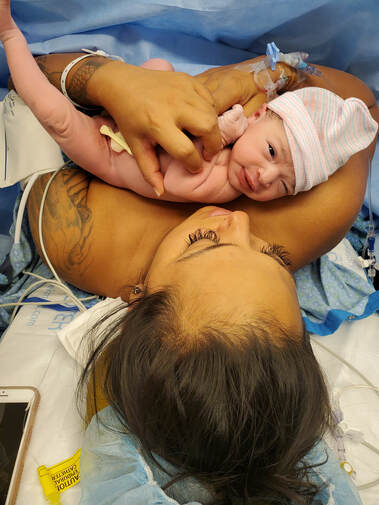
IntroCesarean section births can be beautiful and empowering, regardless of how we got to that decision. Not everyone wants a c-section, but for one reason or another, it is a possible option to ensure mom and baby are both healthy and safe for delivery. Here is the rundown of what you can expect in a c-section WITH doula support! Pre-SurgerySo, if it is planned, there is about 2 hours of prep time before surgery, unless it is an emergency situation. During that time, your doula can support you in many ways and keep the mood light (massage your feet, play music, keep you distracted, celebrate!). The staff will come in separately at different times to introduce themselves and explain what their role is (baby nurses, anesthesiologist, OB obviously, charge nurse, etc). Any Hypnobirthing/Hypnobabies training can come in handy throughout all of this! As a birth doula, I have some great meditations on an app on my phone to combat pre-surgery jitters and we can use any meditations/relaxing music before, during and after surgery. Your birth doula will try to ensure that they can go back there with you, but it's down to if all staff agree that it's ok for a doula to go back. Usually it comes down to the anesthesiologist. Mom and dad can help advocate in that pre-surgery space for your doula. She would greatly appreciate it! You can say, "We're not going back without our doula." If any staff also knows that they are a seasoned doula (they have worked together before), and they know where to be/not to be for a cesarean, it would be helpful. Some hospitals are just miseducated about the value of a birth doula back in the OR. Surgery TimeMom will go back first to have a spinal placed and staff will get the OR set up. During that time, dad and your doula will get ready in our "white bunny" suits, booties, caps and masks. A nurse come grab them when the staff is ready to begin. They move quickly, like a pit crew, once dad and your doula join mom in the OR. They will likely do a timeout, stating everyone's name and job in the room, including us. A blue drape will be up to establish a sterile surgical station at about mom's sternum. Once they begin the surgery, it takes roughly 5 minutes to birth the baby. There may be some uncomfortable pressure while delivering the baby, as they push on the top of mom's belly to "push" the baby out, similar to someone sitting on your chest. That's where the baby gets the squeeze to get amniotic fluid out. There may be some smells and sounds that are not delightful, so your doula can bring essential oils on Kleenex for both mom and dad. Your doula can play quiet music on anyone's phone or speaker. Sometimes, mom will experience some nausea, which can be helped with medication. I usually give dad peppermint in a Kleenex taped to his bunny suit and that seems to help. Baby is born!Once baby is born, there is an option to lower the drape to see baby immediately after the cord is cut, which is very exciting! One-minute delayed cord clamping is the standard in most hospitals now, but you may advocate until the cord is white and/or stops pulsating. Then, he/she will go to the warmer to be assessed. You may advocate for immediate skin-to-skin beforehand, so long as baby looks ok and doesn't need extra support. Dad can go to the warmer while your doula stays with mom. Dad and your doula can trade spots at the warmer, take photos/videos and bring them back to show mom (or a birth photographer can as well). They keep trading spots until you are all reunited behind the curtain, as mom gets put back together. Some ORs have the warmer within eyeshot of mom being able to see baby. Postpartum RecoveryIt takes about 45 minutes from delivery of baby for surgery to be completed. Baby and dad usually go to PACU before mom does, so it's nice to have your doula with mom for the remainder of the surgery. You may advocate to wait and go together, even having mom hold baby as you go to recovery. Mom will be wheeled into PACU (Post-Anesthia Care Unit) recovery room, where baby and dad are, ideally doing skin-to-skin. Your doula can feed mom ice chips, start breastfeeding, and keep things positive. The nurse will do fundal massages every 15 minutes for those 2 hours as well, but with the anesthesia, mom shouldn't feel it too much, just pressure. Mom and dad can equally do skin-to-skin, if desirable, as mom sometimes will have the shakes post-surgery, and it can feel difficult to hold baby comfortably. After 2 hours in the PACU, everyone will go to the postpartum room. For those first few hours, mom will likely feel pretty out of it and may forget a lot of what happened, so it's nice for photos to be taken for memories. The nurse will make sure mom is staying on top of her meds for the pain. A birth doula will stay for about 2-4 hours immediate postpartum, so once mom, dad and baby go to their postpartum room is when your doula typically leaves, but they can definitely stay for longer to make sure everyone is a bit more settled in and ready to rest. All babies typically fall into a deep sleep 2 hours after delivery. In the case of TWIN/NICU BabiesFor twins, dad usually goes with babies at some point, either to NICU (Neonatal Intensive Care Unit) or the PACU. If the baby/ies need to go to the NICU before mom is finished with surgery, your doula will stay with mom to keep her company. Dad can advocate for skin to skin in the NICU once babies are stable. Prior to going to PACU, the staff can wheel mom into the NICU before moving to the PACU or after 2 hours, before heading to the postpartum room. Some hospitals have a room-in NICU, where mom and dad can stay. While in the PACU, your doula can help mom by feeding her ice chips, expressing colostrum, showing photos of babies, and keeping things positive. If the babies are in the PACU with mom, they can do lots of skin to skin with mom and dad, and even tandem breastfeed. Surgery Recovery TipsRecovery will be substantially more intense compared to a vaginal birth, due to major surgery. Getting your baby properly latched as much as possible will ensure success in your breastfeeding/pumping journey. When pumping, look at your babies' photos, smell their clothes/hats/etc. Tips for recovery for the first few weeks: - Wear high rise undies - Wear a belly band for 8 hours/day during the daytime - Avoid heavy lifting and stairs - Be religious about taking pain meds, gas meds, and stool softeners on time! - Get an ice pack in the shape of your incision (alternate heat and cold) - Get a step stool for getting up and out of bed - Roll out of bed still, so as not to use those abdominal muscles as much as possible - Get one of those long-reach grabber tools for reaching things when breastfeeding/pumping - Have water and one-handed snacks beside you at all times, especially during breastfeeding/pumping - Place and hold firm touch to a pillow on your incision area when you need to sneeze/cough or when you laugh or cry (have it nearby!) - Have LOTS of help during those first few weeks as you recover (ask your birth doula about a postpartum doula in advance for those first few days/weeks) Cesarean Section OptionsSome things to discuss with your provider, if they are open to these options:
Final ThoughtsI completely understand that everything can be overwhelming at first, but this is for your benefit, to learn new things and grow from a new steep learning curve. Embrace the insanity of it all! Take things minute by minute, LITERALLY, as you endeavor a beautiful and new incredible adventure as your family grows.
Hope this helps! "Self-care" isn't just some catchy phrase. Self-care is a process that's all about prioritizing your mental and physical health in a way that lets you achieve your goals. If you're a busy mom with kids to care for, that may sound easier said than done. Don't stress. Here, we share some simple steps you can take to make it easier to stick to your self-care goals. Love in Motion Doula Services can help you successfully navigate birth and postpartum. Create a Space That's Conducive to Self-CareSet up a soothing space that will allow you to prioritize wellness. Start by eliminating clutter, which is proven to alleviate anxiety, and cleaning your home. Vacuum regularly to remove pet dander, dust mites, and other allergens. A Shark vacuum is easy to use. Just empty it after each use. After it's two-thirds full, it loses suction power, which means you'll have to vacuum more frequently to get the same result. Define Your Self-Care Goals and Create a PlanOnce you have a clean space, it's time to concentrate on yourself. Action for Happiness provides tips you can use to set your objectives. Once you have your goals, create a step-by-step plan to help you reach them. For example, if you want to prioritize healthy eating, you might compile healthy recipes and take a cooking class. Touch Base With Old FriendsStaying connected with old friends can help maintain long-lasting friendships, provide a sense of familiarity and support, and promote mental health and well-being. Using a search engine to find old friends in Denver can be an effective way to reconnect with people from your past. By using information such as their name, school, or location, this can be especially useful when social media or phone numbers are not available. Measure Your Progress on a Regular BasisWhen you create your step-by-step map to reaching your goals, include a timeline. For example, you might say you'll get your degree within two years and obtain your first job in three years. You can then use this timeline to check your progress, making sure that you aren't wasting time and that you're sticking to the plan you made for yourself. Hold Yourself AccountableHolding yourself accountable can be difficult, especially when you're managing a household and raising kids. Your personal wants and objectives may not always take priority. If you struggle to hold yourself accountable, this Master Class can help you improve. Tips include getting an accountability partner, recognizing signs of procrastination, asking others for feedback, and rewarding yourself for every success. Be Patient with YourselfWhen you're striving to achieve your goals, you may get impatient with yourself. It can be frustrating if you don't make progress as quickly as you'd like, for example. It's important to be gracious to yourself. Remind yourself that every step forward is progress. You can improve patience with yourself and others—a valuable trait for any mom--by practicing mindfulness techniques. This encourages you to focus on the moment. Get Help When Needed Just because you're focusing on your personal goals doesn't mean you have to do it all yourself. Find help where you can. For example, a personal trainer can help with fitness goals, while a nutritionist can help with diet goals. If you're struggling to figure out your career path, a career coach can provide the guidance you need. Prioritize Your Well-beingFinding time for self-care as a busy mom isn't easy, but it is essential to your long term happiness. The key to success is having a strategic approach. By reconnecting with old friends, creating a healthy home space, and holding yourself accountable, you can create a plan for yourself. *Article by Janice Russell*

If you're a stay-at-home mom, starting a business from your home is a savvy move. You can still care for your kids and spend quality time with them while also earning some extra money for the household. That said, starting a business of your own requires strategic planning if you want it to be a success. This guide from Love In Motion Doula Services provides some practical pointers for stay-at-home moms who are considering becoming entrepreneurs. Select a Mom-Friendly Business Model Not all business models are suitable for stay-at-home moms. For example, you don't want to do something like dog walking or driving for a rideshare service since you have to be home to take care of the kids. Don't worry. There are many mom-friendly business options available. Woman’s Day notes that options include working as a virtual assistant, proofreading, writing, and flipping used goods like furniture for profit. Write a Well-Organized Business Plan Once you've decided what type of business you want to start, write out a business plan. This document describes your products and services, and details how your business will be run. Finder explains how to write a business plan that covers all the essential sections, like the market analysis, marketing and sales strategy, and financial projections. This document will serve as your guidebook as you get your business off the ground. Register Your Business It's smart to register your business as a formal legal entity with your state. This could be a sole proprietorship, limited liability company, or partnership. Registering your business as a formal legal entity offers many advantages, from simplifying your tax filing to protecting your personal liability in case your business gets into legal troubles. Earn Credentials to Boost Your Entrepreneurial Profile Depending on the type of business you want to start, you may need additional credentials. More generally, getting a degree like an MBA can help sharpen your business acumen, giving you the knowledge you need to succeed. Look for online programs in topics such as leadership, marketing, and management. With an online degree, you can study when and where you want, getting the flexibility you need as a working mother. Create a Focused Work Space When you're running a business out of your home, it's tempting to simply set up your laptop at the kitchen table or on the living room couch. However, it's important to create a distinct space for your work. This will make it easier to focus and avoid distractions. Small Business Co provides tips for creating a focus-friendly workplace at home. For instance, you want to ensure your workspace has plenty of light and that you have ergonomic furniture. Create a Strong Business Brand and Start Marketing Marketing is essential to attracting customers. Great marketing starts with a strong brand, which will help you stand out from the competition. Your brand also includes your visual identity, such as your logo. You don't have to pay a fancy graphic designer for your logo. Instead, you can use a free online logo maker to create an appealing design yourself. You can personalize details like the text, icon, fonts, and colors. Creating memes to share on social media is another strategy that will graphically convey your company’s personality, and do so in a fun and entertaining way. You can try a meme generator app to create memes that are relatable or inspirational that’s sure to get customers to interact with your brand. Just make sure you make the content relevant to your business and keep it in good taste – the last thing you want is to turn people away. Maintain Your Work-Life Balance When you're starting a new business, it can be easy to get caught up in the process. When you're juggling entrepreneurship plus kids, this can leave little time for yourself. Make sure you're maintaining work-life balance by expanding your support network. You may also want to look into finding a babysitter, too. Even if you don’t use them full time, having a few hours each day can make a big difference in the amount of work you can get done. Or you may even be able to carve out a little time for yourself. Starting a business is a major undertaking—especially if you've got kids to care for, too. That said, entrepreneurship can be a great way for moms to balance child care with work, all while making some extra money. The above guide details the steps you need to get started. Love In Motion Doula Services makes positive birth and postpartum experiences an outstanding normal for all. Connect with us today to learn more! 720-593-0014 **Written by Janice Russell**

When you become pregnant, your lifestyle changes, or at least should. Here is a helpful article written by Rebecca Wilde at the Birth Injury Center. Many injuries can be avoided by following some simple lifestyle shifts to ensure a health delivery, mother and baby throughout postpartum.
birthinjurycenter.org/what-to-avoid-while-pregnant There are many other jewels of information on this website as well. Please go check it out! Article written by Janice Russell There’s nothing easy about launching a business when you’re already busy welcoming a new baby into the world. But life has a funny way of throwing everything at us all at once. In many ways, nurturing a new business is a lot like tending to the needs of a newborn. Entrepreneurs and parents both need resilience, a strong work ethic, and plenty of love. The hard part is figuring out how to balance your mental resources between the two! Here are some great tools, resources, and strategies from Love In Motion Doula Services to help ease your transition into parenthood while you prepare for the launch of your new business. Use Helpful Online ToolsOnline tools can make your life a lot easier in the coming months and years. This can start with virtual doula consultations with Liz Foster CD(DONA), HCHD of Love In Motion Doula Services. You’ll be able to meet with Liz via video chat to discuss birth and postpartum plans, and discover ways to reduce stress and any fear that you and your partner may have leading up to the delivery date. On the business side, by automating repetitive tasks and leveraging digital tools to tackle one-off projects, you’ll be able to carve out more time for your little one once they’re home. You can find online tools to help with almost any business task under the sun. For example, a cloud-based invoicing system allows you to easily maintain your records while interacting quickly and efficiently with your customers. Invest in Smart Home SolutionsInnovative technology can also come in handy for working parents. When you’ve got your hands full with work and newborn responsibilities, Mysa notes that hands-free smart assistants will make your life much easier! Smart voice assistants like Alexa and Siri can help you stay on schedule and avoid forgetting important appointments. Adding smart lighting, heating, and security to your voice assistant system will give you even more control over your busy life. Stick to a ScheduleRoutines generally help us stay grounded when life feels out of control. Create a simple schedule that works for you and your baby, so you know what to expect throughout the day. This can minimize the number of decisions you need to make and free up some of your mental bandwidth for business-related tasks. To keep everything running smoothly, try to build your daily schedule around your baby’s routine. While babies may not follow a strict schedule, You should notice some kind of loose routine governing when your baby tends to require sleep, food, and play. The Bump explains that babies start falling into routines around 3 months of age. Until then, you’ll just have to go with the flow! Combine your Home Office and PlayroomCombining your home office with a playroom is a great way to keep your little one close and get work done at the same time. Choose a safe baby playpen and set it up next to your desk. When your baby starts crawling, this will give them more space to move around and play while you work next to them. A pen will ensure your little one won’t wander off or get into trouble in your office while you're concentrating at your desk. Be sure to also babyproof your home office properly!
When you’re rearranging rooms, you may need to temporarily store items to free up space. This, too, is made easy when you use offsite storage. You can find affordable storage units in Denver by Googling facilities throughout the area. With more than 200 locations in and around the city, you’re bound to find a unit that’s nearby. Launching a business while welcoming a newborn is bound to be challenging. It might take some time to settle into your new roles and find the best routines that work for you and your baby. With a little help from innovative tools and a smart schedule, you can manage parenting and running a new business at the same time. Love In Motion Doula Services believes that the keys to a joyful birthing experience are safety, security, support, preparation and a calm mindset, all planned in advance, to be by your side for anything that should arise. Contact us today to learn more! 720-593-0014 Every pregnancy is specific, but all first-time moms-to-be out there share one thing - they overthink! And how not, you might ask, when our bodies and lives are soon about to change like never before? You already know that all fears and anxieties come from a lack of experience, which is easily solved. How? With some kind pieces of advice, cordial and professional support, and one detailed pregnancy checklist. Pregnancy trimesters and checklist and why we need themIt is much easier to track fetal development if the pregnancy is divided into three stages. It's also because each stage is marked by characteristic developments in the fetus and a woman's body. Hence, each group of changes corresponds to a trimester.
At the end of the third trimester, at 36+ weeks, a pregnancy is considered full-term. It means that babies born before week 36 are considered premature and may need to spend additional time in an incubator to grow and fully develop. A pregnancy checklist is designed to help a future mom find herself in the coordinate system of pregnancy and help her focus on tasks vital for her and the baby. Also, it is paramount to note that a checklist is only a reminder, and it should be regarded as such. There's no alternative to regular checkups and tests. Remember that every pregnancy is unique, and only a dedicated physician can give you guidance explicitly designed for you. The "Now what?" and "What next?" of pregnancyNutritious food, light exercise, and sufficient water and sleep are the four pillars of a healthy lifestyle that become vital in pregnancy. Forget about smoking and alcohol, and consult your physician if you take any therapy. Find some books on pregnancy and preparation for childbirth, as learning how to prepare mentally and emotionally is critical. Trimester 1. Month 1.
Trimester 1. Month 2.
Trimester 1. Month 3.
Trimester 2. Month 4.
Trimester 2. Month 5.
Trimester 2. Month 6.
Trimester 3. Month 7.
Trimester 3. Month 8.
Trimester 3. Month 9. *If there is a risk that you may deliver early, consider checking these off in month 7 or 8.*
Finally, relax! It's all set. If you consult your pregnancy checklist, physician, doula, and everybody who works in your and your baby's best interest, you're on the path to a more informed and calmer pregnancy. Support and care are what you need and what you deserve! A new baby in the home changes the entire dynamic of your household and learning to manage remote work with a newborn or baby can be quite the challenge to even experienced parents. Take steps to ensure the experience is a positive one for everyone involved. Use these tips to help succeed with both your baby and your job as you learn to navigate this new world. 1. Create a Schedule You Can Stick To Humans of all ages benefit from a schedule and when you have a newborn, you have a unique opportunity to establish one that can work for you both. Things like feeding times, naps, and diaper changes should be scheduled and you should do your best to arrange your work schedule around your baby’s needs. If possible, arrange for more intensive work times when your baby is napping or after they have nursed when they are most content. Pay attention to when they seem to have the most need of you throughout the day and do your best to schedule the least demanding work responsibilities during those periods. Understand that even with the perfect schedule, parenthood is unpredictable, and there will inevitably be times when you have to rearrange things to care for your baby. Go easy on yourself when this happens. It is a natural part of life and you are doing your best. 2. Keep Your Baby Busy During the times when your baby isn’t feeding and sleeping, plan activities that are engaging but require minimal supervision such as time in their bouncer, their activity mat, or other stationary play stations. Consider wearing your baby while you work when possible in a wrap or baby carrier so that they are still close to you and you can keep an eye on them. 3. Let People Help You Caring for a baby is deeply rewarding, but even without a job to distract you, it is a lot of hard work. It’s easy to feel like you have to do everything on your own or else you are a bad parent, but that couldn’t be further from the truth. Humans are community creatures and historically, new parents have had any number of people to rely on to help them raise their babies. Don’t be afraid to ask for help when you need it from your support system and trained professionals. According to Mental Health First Aid, not only is it important for your mental health to feel supported, but it is also good for your baby to learn they have a group of people they can depend on for love, care, and attention. Additionally, don’t take on too much at work. Now is not the time to be taking on extra tasks. Learn to say no to extra hours and more responsibilities. You have enough on your plate. 4. Consider a Career Switch If your job is overwhelming you or you no longer feel it is the right fit now that you have a baby in the home, consider a career change. With degrees available online in almost every industry and many that span multiple sectors, there’s no reason you can’t go back to school from the comfort of your home to make it easier for you to find something that works for both you and your family.
You are capable of rising to the challenge before you. Prepare when you can, ask for help as you need it and make changes as you need to. Both you and your baby will be grateful for it. Article by Daniel Sherwin [email protected] If you are planning a move while pregnant, you want to ensure that you have coordinated as much as possible in advance. If you have children who can help, it will actually make it better for you and them. Involving them in the process helps everyone be less stressed. Love In Motion Doula Services shares some tips on how to navigate the moving process when you’re expecting:
For most people, moving is a very stressful and time-consuming activity. For people with small children, the stress is even greater, and for people who are expecting and already have small children, moving can be so stressful that it may seem like an impossible task. However, a little bit of preparation and a lot of patience can make getting through the experience a lot easier. Raising a child to age 17 costs an estimated $233,610, according to a study by the USDA. The newborn and toddler years add up with the cost of delivery, diapers, and clothes they outgrow quickly. Make preparations for a budget-friendly pregnancy to start saving money early. Staying Healthy on a BudgetGoing into the pregnancy as healthy as possible can reduce complications and make the pregnancy easier. You don't need expensive prenatal exercise classes to stay healthy. Simply walking or swimming on your own is effective. Prenatal exercise benefits include less back pain, decreased constipation, better sleep, and shortened labor, according to Mayo Clinic. Check with your prenatal care provider to ensure exercise is safe for your situation. Check on prenatal vitamins from different sources. You can get prescription or over-the-counter prenatals, so compare the costs to find the cheapest option. Choosing Affordable ProvidersThe mean out-of-pocket expense for childbirth in Colorado is $2,300 for people with insurance, according to the Health Care Cost Institute. Your costs may vary based on your insurance coverage. Call your insurance company to verify your coverage amounts and find preferred providers, which can lower your costs. Midwives can often provide a more cost-effective option if you have a low-risk pregnancy. Total birth costs are typically about $2,000 cheaper with a midwife. Writing a Birth PlanPlanning the birthing process can help you deliver how you want. This planning also helps control costs by deciding where you want to give birth. If you use doula labor services, your doula can help write your birth plan Sorting Out Your FinancesReworking your budget to account for things like childcare and diapers should happen now. If your current home isn't big enough, consider moving. Research the loan options and practicality of buying a new house on your current income. Use a mortgage calculator to determine your options based on your down payment and the current average mortgage rates. Another option is a home improvement loan for an addition or remodeling your current home if moving isn't feasible. Stocking Up EarlyOngoing expenses add up quickly. Expect to spend about $75 monthly on diapers and wipes and $70 to $150 per month for powdered formula if you don't breastfeed, according to New York Life. Stock up now to spread out the costs, but check expiration dates on formula before buying. Joining Mom GroupsBecoming active in Denver mom groups helps you meet other local parents who can give you advice and share affordable parenting hacks. Some groups, like locally-based Moxie Moms, offer discounts at local retailers and schedule free events with other parents. Shopping ConsignmentMaternity clothes are expensive and you don't need them long. Shop consignment stores for affordable maternity clothes, or connect with other moms to borrow maternity clothes. Consignment shops also save you money on baby clothes and gear Affording a BabyPregnancy preparation gives you time to find the support team you need while sticking to a budget. Whether you want a home birth, birthing center, or traditional hospital setting, having experts to help you along the way makes it easier. Explore labor doula services from Love in Motion if you're planning a pregnancy in the Denver area.
Working remotely has its benefits for parents. Balancing parenting with work while your little ones are around, though, can feel like a tightrope walk. Liz Foster offers these tips for how to better manage remote work with children.
1. Perfect Your Workstation Having the kids in the home while you try to work is going to be distracting enough, even if your partner or another caregiver is watching them, so you need to have a workstation that is set up to limit distractions as much as possible. If you’re able, establish your office in a separate room or area of the house. Consider putting up a screen or room divider if you need to be in the same area so that you aren’t visually distracted. Invest in a quality pair of noise-canceling headphones. If your cellphone isn’t necessary for work, keep it put away so that notifications won’t steal your attention away from work. Likewise, you should remove any apps from your computer that aren’t work-related to limit distraction. 2. Commit to a Schedule Adults working from home benefit from a schedule, as do kids, according to the Early Childhood Learning and Knowledge Center. Establish one early on and don’t deviate from it unless absolutely necessary. Plan activities that are engaging for your kids that aren’t noisy and can be self-managed. Make “quiet time” part of your schedule so that kids know there are times during the day when they need to be particularly quiet to accommodate any meetings you must attend. Incorporate breaks into your day for the benefit of both you and your kids, and consider eating lunch together when possible to give your children some face time with you. This will help everyone recharge for the remainder of the workday, as well as help lessen distractions. If children know they will have scheduled time with you each day, it can minimize their desire to interrupt your work as they'll know they can talk to you later. 3. Plan for Emergencies Even the best-made plans fail sometimes, so it’s important to have contingencies for when things go awry. Have emergency childcare in place in case you or your regular childcare provider are unable to watch the kids. When that isn’t available, have an emergency “bag of tricks” with ways to entertain and engage your children safely that can allow you to still work. This might include a movie you know the kids would love to see, a special art project that can be self-directed or a new toy that can entertain them for a few hours while you finish your work. 4. Adjust When Necessary If your current setup isn’t working for you, consider going back to school online to earn a degree that can get you closer to your desired job in business, healthcare, education, and other industries. Many of these can be completed at your own pace so that you won’t have to worry about school getting in the way of your current job or caring for your children. If you want to continue working from home, there are many options in high demand, including website building and design and digital marketing. Do your research to see what profession will give you the opportunity to work and parent in a way you can be proud of. Parenting while working from home can be tough, but the difficult bits can be managed with the right practices implemented and strong backup plans. Do your best, knowing at least your children will see you working hard to give them the life they deserve. Written by Justin Bennett [email protected] There are so many items that you'll find on any suggested baby registry. And it's overwhelming! Below are the bare basics of what you would need in preparation for baby's and mom's needs. Essentials Baby Registry For Baby
Feel free to contact me for any
|
Author's Philosophy
Archives
December 2025
Categories
All
|
|
Serving families in Denver, Highlands Ranch, Lone Tree, Littleton, Castle Rock, Aurora, Centennial, Lakewood and more.
|
|


RSS Feed